


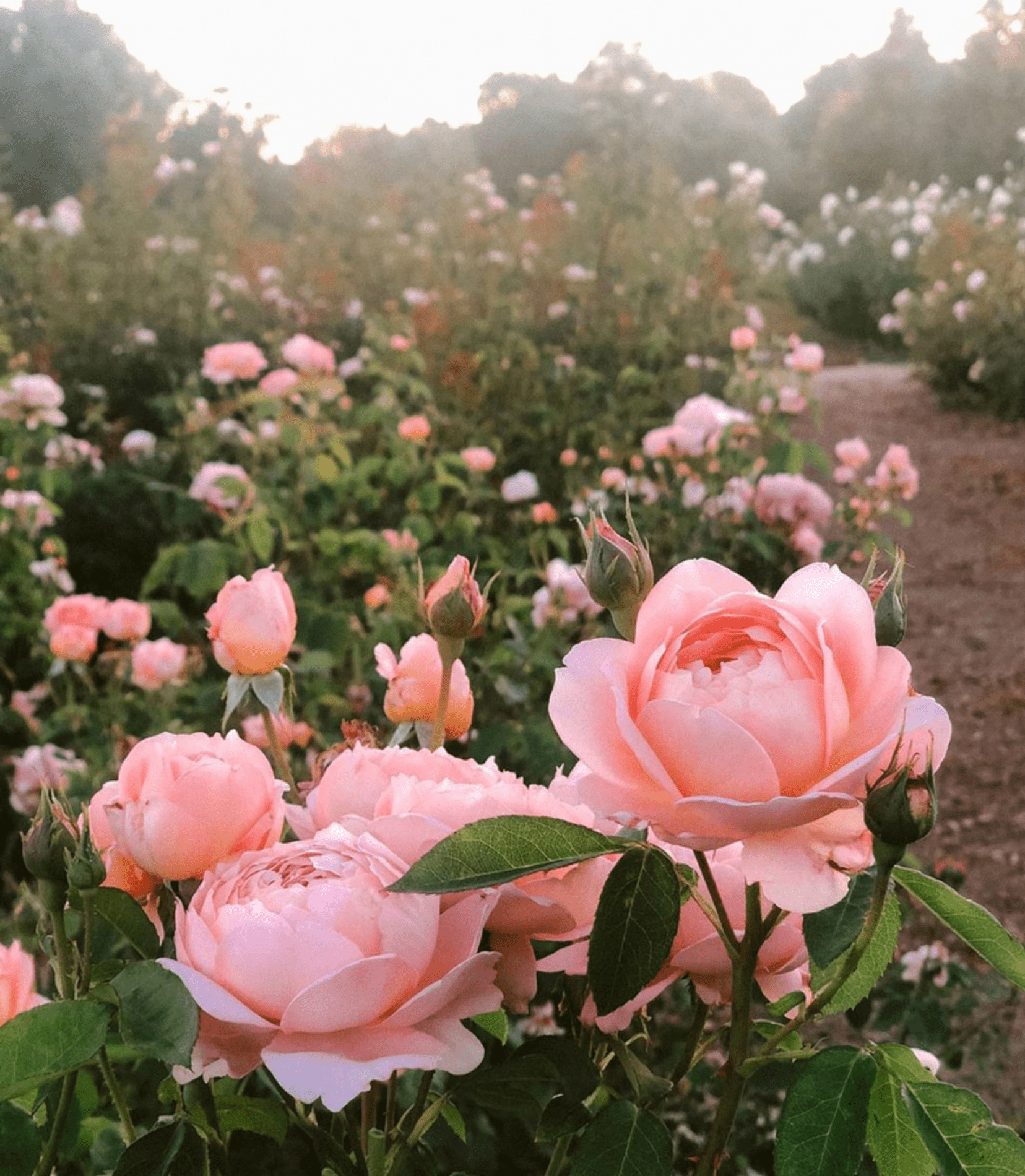
This week's rose care newsletter is contributed by Susan Lyell of Restoration Rose. You can follow Susan on Instagram where she shares her vast knowledge of growing roses and shop her artisan rose infused bath, body and home products!
Every year, beginning mid June here in Tennessee, Japanese Beetles descend on my garden and likely yours too if you are east of the Mississippi river. Japanese beetles are beautiful in appearance, but terribly destructive to roses and other ornamental plants during their four to six week visitation.
First found in this country in 1916, Japanese Beetles were accidentally introduced into New Jersey. According to the USDA, they are slowly moving westward.
The lifecycle of the Japanese Beetle is such that it grows in the soil and then emerges from fully formed to live for thirty to forty five days, dying after burying its eggs in the soil. Because it is hungry and ready to eat when it arrives in your garden, there is not much you can do once they have appeared. However, the good news is that they can be destroyed - and they should be to prevent new beetles for the following season!
Japanese Beetles particularly like to overwinter in grass and turf areas. Therefore, the more lawn you have, the more beetles you will have to contend with. Fortunately for me, my passion for roses and gardening has resulted in the removal of all the lawn from my city garden. As the grass in my lawn was reduced, so was the Japanese Beetle population. So…start another garden area!
Additionally, Milky Spore applied to grassy areas does work but takes several seasons to do so. If you apply Milky Spore do it for consecutive seasons to get the best results.
Once Japanese Beetles have arrived, the easiest way to reduce the population is to pick them from your bushes using your hands. You can carry along a bucket of soapy water and simply drown them. This reduces the population and always reduces newcomers. Botanists believe the smell of chewed foliage attracts other beetles. Japanese Beetles are drowsy in the mornings before the sun has risen and most active in the heat of the day. Visit the garden early in the morning to make for an easier task. If you are closely paying attention and start to intervene as soon as they arrive this is a very effective method. If you are squeamish and can’t bring yourself to remove them by hand, I have actually used a shop vac to remove them. It’s fun too, but more work. Fill the collection tank with soapy water and have a go!
Depending upon how many roses you have you may tent the buds with organza bags, like those used for wedding favors. This will protect your blooms but not the foliage, thus another good reason to physically remove the beetles.
In my garden they usually arrive around the end of the second flush. So anything that is budding in early June I prune a little harder than I normally would. This ensures that the beetles will be gone before the next flush. I strip any chewed foliage and give them a deep watering and nice feed of fish emulsion or Neptune’s Harvest.
Attracting and releasing beneficial insects can help. Two parasitic wasp species, Tiphia vernalis and T. popilliavora, are natural enemies of the Japanese beetle grub. A tachnid fly, Istocheta aldrichi, will parasitize adult beetles. The presence of aphids, and Umbelliferous plants like fennel, dill, and Queen Anne’s Lace, will help retain these beneficials in your garden. Aphids will attract beneficials to your garden!
Researchers are studying geranium petals as a possible Japanese beetle control. According to the Agricultural Research Service ~ when Japanese beetles eat the petals of a geranium flower, within 30 minutes they roll over on their backs, their legs and antennae begin to twitch, and they are paralyzed for a few hours. Even though they are typically recovered within 24 hours, they often fall victim to predators, since they are unable to defend themselves while they are paralyzed.
Neem oil may or may not be effective to reduce destruction. The jury is out on this one. If you use it you will need to spray every 7 days while beetles are feeding. Otherwise don’t waste your time. To prevent leaf burn and avoid hurting bees and other beneficials, spray just before dark. Hand removal and/or blasting them with warm soapy water is just as effective.
As you can see, there are many ways to deal with Japanese Beetles depending upon the size of your garden, your need for cut flowers and the amount of energy you are willing to expend to combat them. Regardless, they will not kill your plants, only set them back a bit.